PBAFER
Developing food ingredients using circular biotechnology strategies to improve the nutritional and sensory properties of plant-based alternative food products-PBAFER.
Related links:

Developing food ingredients using circular biotechnology strategies to improve the nutritional and sensory properties of plant-based alternative food products-PBAFER.
Related links:
Artículos científicos
Tesis doctoral relacionada con este proyecto
The general goal of the PBAFER project is to produce ingredients for fermentation, in order to improve the sensorial and nutritional properties of plant-based products.
Throughout the project work was done on producing aromatic compounds and exopolysaccharides (EPS) through fermentation to improve the sensory profile, as well as microbial oil (SCO) and mannitol to improve the nutritional profile. CNTA developed prototypes of plant-based products with some of the ingredients produced by fermentation and, at the same time, CENER worked on production processes for EPS and SCO at a pilot scale and in a transversal way on the evaluation of the viability and environmental impact of the processes developed.
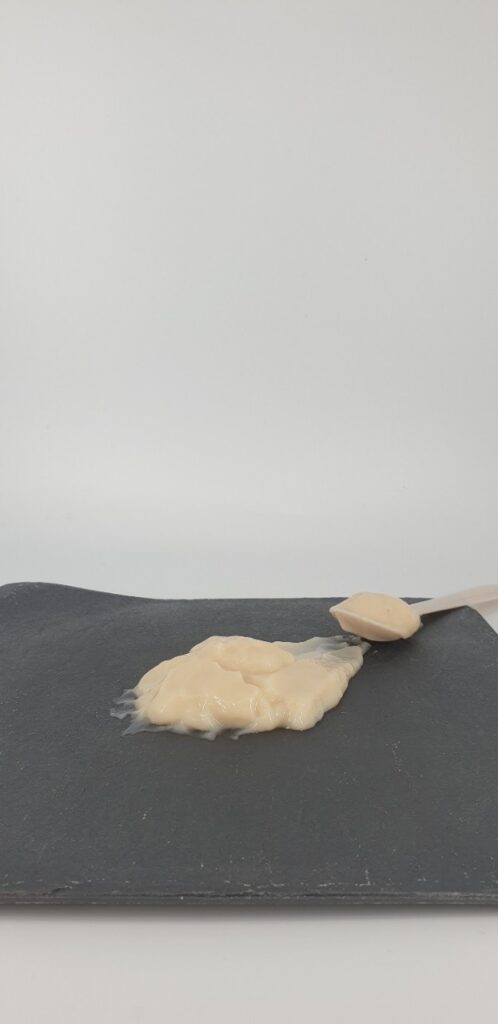
To produce EPS with thickening capacity through fermentation, CNTA sought to incorporate food byproducts to give them higher added value. Along those lines, an EPS production process was established using sugar beet molasses and brewer’s spent yeast that were pre-conditioned using a process developed during the project. In turn, CNTA optimised the production of EPS as an ingredient in itself at laboratory scale. And, on the other hand, they translated the learning to the fermentation of plant-based milk to obtain a typical custard texture that was used as a base for developing several prototypes of formulations like plant-based deserts and yoghurts.
EPS rich plant-based fermented milk base without additives
On the other hand, CNTA developed fermentation processes to produce microbial oil using spent sugars and oils, and they identified the kind of raw material that is most suitable, taking operational simplicity and process yield into account.
CENER scaled the production processes of both ingredients (SCO and EPS) to 100 L, as well as the conditioned brewer’s spent yeast, doing technical-economic and life cycle studies and identifying the most costly expense items and the processes with the greatest environmental impact in each case, which is valuable information that could be used as a starting point for pre-industrial scale-ups.
On the other hand, CNTA developed a fermentation process to produce a leavening agent rich in mannitol (a sweetener) and without residual sugars, with which they formulated low-sugar breads, seeing an increase in sweetness with higher amounts of leavening agent used.
Lastly, CNTA developed a fermentation process with which it is possible to obtain plant-based yoghurt with lactose aromatic compounds (acetoin and diacetyl) using plant-based milk supplemented with specific nutrients that are inductive of its production.
In all cases, the fermentation processes were developed used non-genetically modified strains (lactic bacteria and yeasts) owned by CNTA. This project made it possible to identify strains that can produce ingredients or validate their previously identified capacity.