e-bioMeOH is a collaborative project led by the Biomass Department at CENER (national centre for renewable energies), on which NAITEC, specifically the mechatronics unit, participates as a member.
Within the framework of the energy transition, decarbonising some sectors, like heavy road, air or sea transport and numerous industries, especially the chemical industry, presents numerous challenges because of their high dependency on fossil fuels.
Methanol is one of the most important chemical products insofar as the market for its numerous uses, including fuel for transport, and for the amount of emissions produced during its production. Because of that, this project intended to develop an alternative route to methanol production with CO2 and renewable electricity using microbial electrosynthesis, and in that way avoid not just greenhouse gas emissions but also obtain a 100% green fuel.
During more than two years of the project work was done from different perspectives, given the markedly multidisciplinary nature of developing a disruptive technology like microbial photosynthesis, which combines biological and electrochemical processes.
Thus, several tests were done with diverse microorganisms to isolate CO2 and produce methanol. And, despite the negative experimental results with the methanotrophic bacteria initially mentioned, it has been possible to theoretically identify a mixture of microorganisms suitable for the purpose.
Likewise, 1 litre TRL 3 and 5 litre TRL 4 prototypes of the microbial electrosynthesis reactor has been developed based on conventional fermentation technology, incorporating electrodes for the electrochemical synthesis (photo 1). As an additional improvement to the process, a prototype system for methanol extraction (photo 2) from the mixture of the bioelectrochemical process was developed that can be used continuously, contributing to an increase in productivity for this kind of process.
All those processes and designs have also been backed up by models and simulations with advanced software that lets us make improvements and change the operating conditions and, in the future, adapted and functionalised materials for developing the electrodes will be able to be chosen.
Despite it not being possible to obtain methanol from CO2 during the project, the results are very positive given the high versatility of the electrofermentation technology that can be used to produce numerous products starting with diverse substrates, using suitable microorganisms in the right operating conditions.
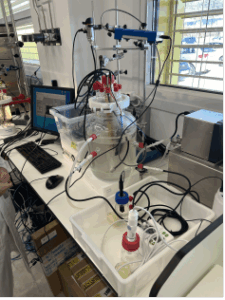
Photo 1. Electrofermentation process for producing methanol from CO2 in a 5 litre reactor at CENER
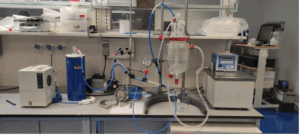
Photo 2. Pervaporation module test bench for methanol purification at NAITEC