Leguminous crops are key to the sustainability of agricultural systems, thanks to their ability to establish a nitrogen fixing symbiosis with soil bacteria. That symbiosis makes it possible to obtain a source of nitrogen from the air, reducing the need for synthetic nitrogen fertilisers and minimising their negative impact on the environment.
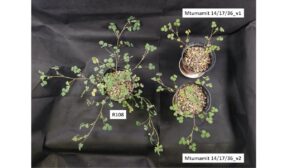
Nevertheless, creating the symbiosis is complex, and a detailed study is necessary to have a deep understanding of it. With the UMAMIT project we tackled the question of how the exchange of nutrients between the roots of the plants and the symbiotic bacteria is produced. Specifically, we have studied the exchange of molecules called amino acids, the structural unit of protein, using UMAMIT transporters in the Medicago truncatula model legume. We compared the growth of wild plants (R108 on the left in the picture), with the growth of plants with altered expression in several UMAMIT transporters (on the right in the picture). This work has made it possible to understand the importance of amino acid transport in plants for effective symbiosis, contributing to our knowledge in this area.